Kinetic Dreams: MB&F and BREAKFAST
Maximilian Büsser & Friends (MB&F) is known for building fantastical machines — intricate, large‑scale kinetic sculptures that feel like they've stepped out of a parallel universe. Among their collaborators is the artist BREAKFAST, led by creative technologist Andrew Zolty.
Zolty creates installations that use real‑time data as their paint. Wind speeds, climate patterns, stock market fluctuations, even the gestures of a passer‑by — all of it becomes input that reshapes the artwork moment by moment.
At the core of his work is Brixels, a kinetic medium made of motorised bricks that rotate and shimmer to form constantly shifting patterns. They're a physical reminder of how rapidly the world changes.
World Skies
One of his most captivating pieces, World Skies, invites visitors to choose any city on Earth. Instantly, the installation transforms into a living portrait of that location's cloud cover, rainfall, and wind activity.
Immersion as Art: teamLab's Living Worlds
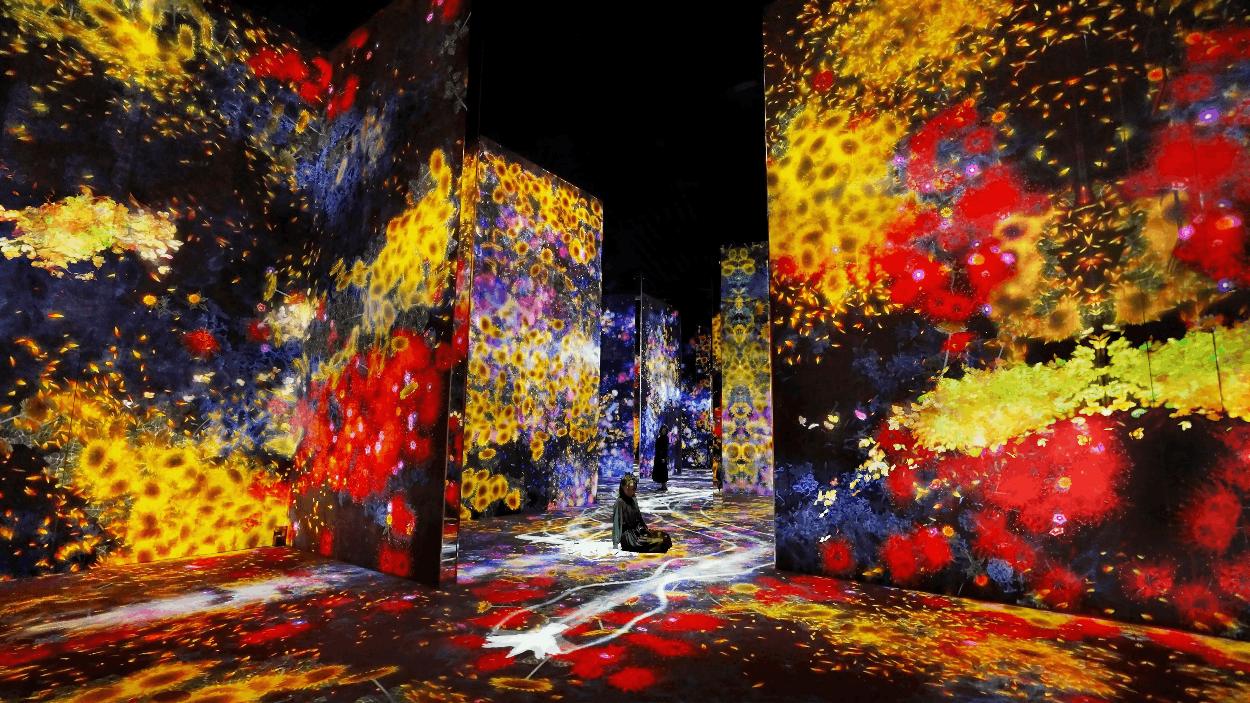
Zolty isn't alone in blurring the line between machine and imagination. Japanese collective teamLab has become world‑famous for creating digital environments that react to their visitors.
Walk into one of their rooms and flowers bloom beneath your feet. Birds scatter as you approach. Waterfalls part around your body. You don't just observe the artwork — you inhabit it.
Their work proves that digital art can be deeply emotional when it's designed to respond to human presence.
Imagine a sculpture that shifts with the stock market, a wall installation that ripples with the weather, or a piece that mirrors the flow of people walking by. This is the realm BREAKFAST operates in — where art becomes a living interface.
Ever-Changing Concept
Art + Technology in the UK: From Early Experiments to Living Data
The UK has long been a fertile ground for artists who see technology not as a threat, but as a tool for reimagining what art can be. While the tools have evolved, the spirit of experimentation has stayed remarkably consistent.
Early Pioneers
In the 1960s and 70s, London's Signals Gallery championed artists exploring movement, light, and electronics. Among them was David Medalla, whose iconic Cloud Canyons sculptures produced endless towers of bubbles.
Powered by oxygenators, these works were unpredictable, ever‑changing, and delightfully alive — early proof that art could behave like a system rather than a static object.
Digital Tools Enter the Studio
By the late 20th century, computers and video technology began reshaping artistic practice. Even traditionalists like David Hockney embraced digital drawing tools, showing that technology could expand — not replace — the artist's hand.
This era sparked new conversations about identity, communication, and the digital self.
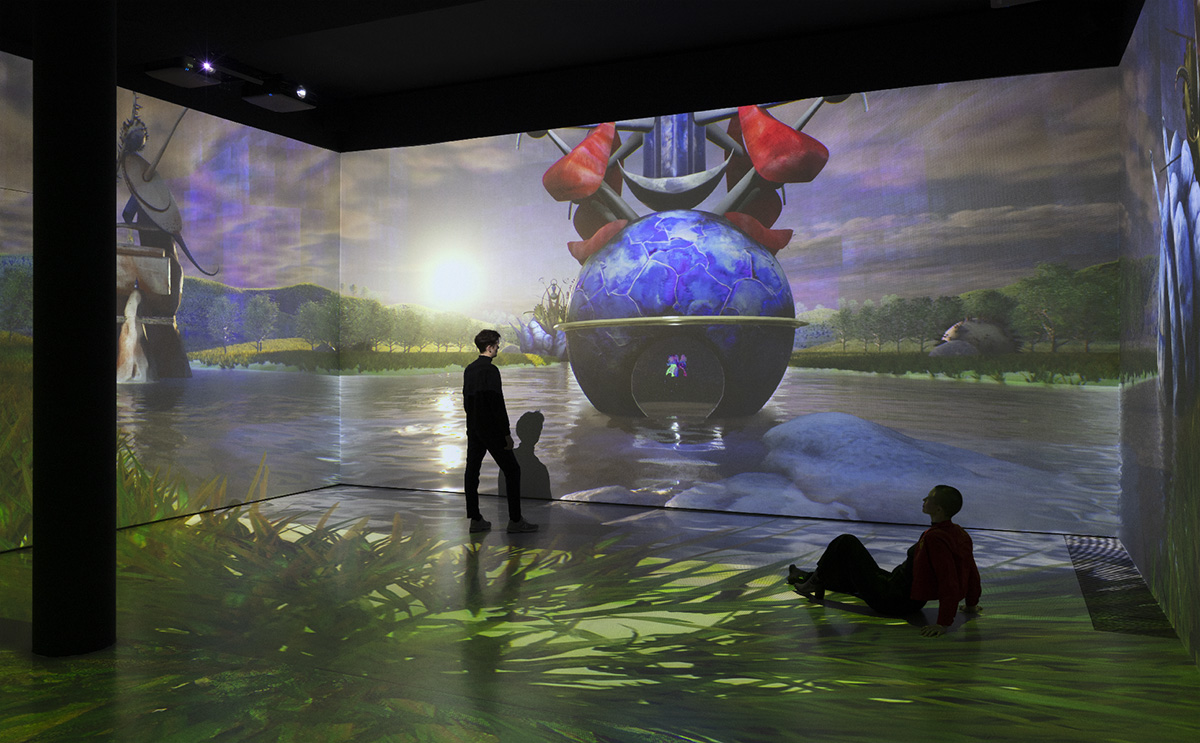
Ent-, 2022
Libby Heaney: Quantum Art
Libby Heaney is the first artist to use quantum computing as a medium. She writes her own quantum code, runs it on quantum machines, and transforms the resulting data into shifting imagery and motion.
Her installations weave together technology, grief, memory, and traditional materials like glass and watercolour — inviting viewers to reflect on existence itself.
Her Somerset House installation, Heartbreak and Magic, is a powerful example of this fusion.
The Future Is Already Moving
As we look across these kinetic sculptures, immersive environments, and data‑driven installations, one thing becomes clear: art is no longer something we simply view. It's something we enter, activate, and co‑create. Technology hasn't replaced the artist's imagination — it has widened the canvas to the scale of the world itself.
From bubble‑breathing machines in 1960s London to quantum‑coded dreamscapes and rainstorms that part at your feet, the UK continues to be a place where experimentation thrives. Artists here aren't just adopting new tools; they're questioning them, bending them, and turning them into experiences that make us feel more connected to the systems shaping our lives.
As emerging technologies accelerate — AI, robotics, quantum computing, environmental sensing — the next wave of art will likely be even more alive, more responsive, and more intertwined with the rhythms of our planet.
The boundary between the digital and the physical is dissolving.
The artwork of tomorrow won't just hang on a wall.
It will breathe, listen, learn, and evolve alongside us.
And that's the real magic: in a world driven by data, artists are reminding us that creativity is still the most powerful technology we have.

PRIME LANE SERVICES FOR ARTISTS
At Prime Lane, we specialize in art shipping worldwide, ensuring that collectors from all over the globe can acquire unique pieces of art with minimal hassle. We understand how precious and personal each artwork is—so we treat it with the care it deserves. Whether you're sending a single canvas across London or a full exhibition overseas, our team specializes in secure, custom packing tailored to the unique needs of artists. From climate-sensitive materials to reinforced crates and compliant documentation, we make sure your work arrives safely, on time, and ready to shine. With trusted courier partners and expert handling, Prime Lane takes the stress out of shipping so you can focus on creating.